
Introduction to Commitment of Traders (COT) Data
The Commitment of Traders (COT) report serves as a critical resource for traders seeking deeper visibility into the positioning of key players across futures and options markets. Released weekly by the Commodity Futures Trading Commission (CFTC), this comprehensive dataset breaks down open interest by trader category, offering a rare glimpse into the net long and short exposures held by different market participants. Unlike opaque sentiment indicators, the COT report reveals concrete positioning data, enabling traders to assess shifts in market psychology, anticipate potential turning points, and better understand the forces shaping supply and demand dynamics. For those active in commodities, futures, and forex markets, the report is far more than a regulatory disclosure—it’s a strategic intelligence tool that can inform entry and exit decisions, especially when integrated with broader analytical frameworks.
Understanding the Different Types of COT Reports
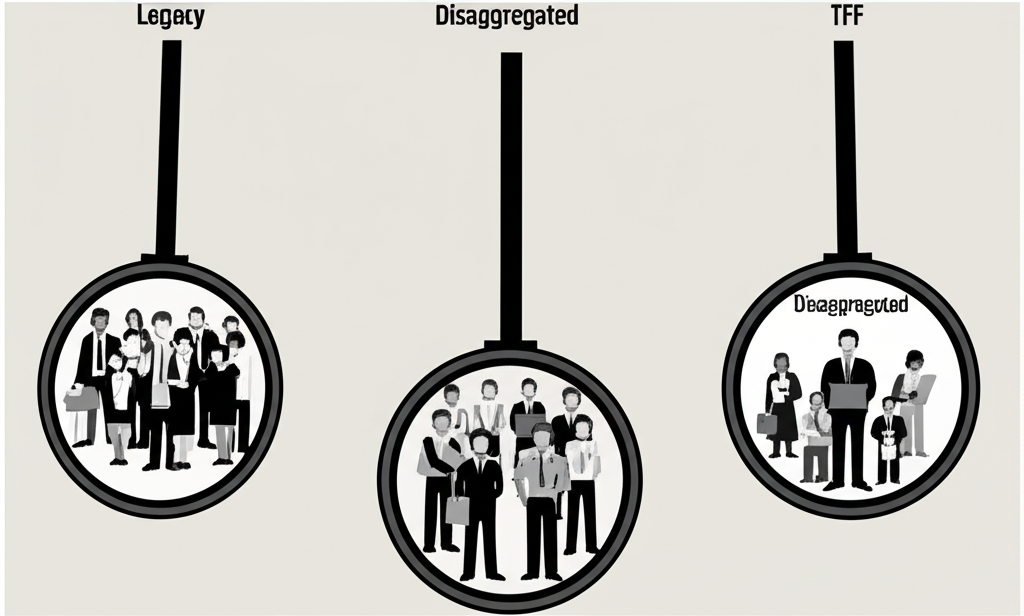
The CFTC publishes multiple versions of the COT report, each designed to provide a tailored perspective on market activity. While they share the same core purpose—enhancing transparency—the way they classify traders varies significantly, making it essential to choose the right version based on the asset class and analytical goal. The Legacy, Disaggregated, and Traders in Financial Futures (TFF) reports serve distinct functions, and understanding their structural differences is crucial for accurate interpretation and strategic application.
Legacy Reports: The Foundational Insight
Introduced decades ago, the Legacy COT report remains one of the most widely referenced versions, offering a broad but effective classification of market participants. It divides traders into three primary groups based on CFTC reporting thresholds and trading behavior, forming the baseline for many sentiment analyses.
* **Commercials:** These are typically large-scale entities such as commodity producers, processors, or end users—think grain farmers, oil refiners, or manufacturing firms. They use futures contracts primarily to hedge against adverse price movements in their underlying operations, not to speculate. Because their positions are grounded in real-world supply chains and inventory management, their behavior is often interpreted as informed and contrarian, earning them the label of “smart money.”
* **Non-Commercials (Large Speculators):** This group includes institutional investors, hedge funds, and professional trading firms that enter the market with the goal of generating returns through price speculation. Their positions tend to align with ongoing trends, amplifying momentum. While they can drive short-term volatility, extreme levels in their net positioning may signal overbought or oversold conditions.
* **Non-Reportables (Small Speculators):** This category captures the collective positions of individual traders whose holdings fall below the CFTC’s mandatory reporting size. Though each account is small, their aggregate behavior can reflect retail sentiment, which historically tends to be wrong at market extremes. While less influential than the other groups, tracking their shifts can still offer supplementary context.
Disaggregated Reports: Granular Futures Market View

Launched in 2009, the Disaggregated COT report was designed to offer a more nuanced view of activity in commodity futures markets. By refining the traditional categories, it allows analysts to better distinguish between hedging and speculative behavior, improving the accuracy of sentiment readings.
* **Producer/Merchant/Processor/User:** This refined category isolates commercial entities actively involved in the physical handling of commodities. Their positions are almost exclusively hedging-related, such as a wheat farmer locking in prices before harvest or a food manufacturer securing input costs. Because their decisions are tied to tangible business risks, their net positioning often carries strong predictive weight.
* **Money Managers:** This group includes registered commodity trading advisors (CTAs), managed futures funds, and hedge funds that take speculative positions on price direction. Unlike the broader “Non-Commercials” in the Legacy report, this category specifically targets professional speculative capital, offering a clearer picture of trend-following flows.
* **Other Reportables:** This catch-all group includes large traders who meet reporting thresholds but don’t fit into the above classifications—such as proprietary trading desks, investment firms with mixed motives, or specialized hedgers. While their intentions can be harder to interpret, sudden shifts in their positioning may still signal meaningful market activity.
* **Non-Reportables:** As in the Legacy report, this segment represents smaller traders who don’t report individually. Their data is derived by subtracting the reported positions from total open interest.
Traders in Financial Futures (TFF) Reports: Unpacking Financial Markets
Introduced alongside the Disaggregated report, the TFF version focuses exclusively on financial futures, including currencies, interest rates, and equity indices. Given the different nature of these markets—dominated by institutions rather than physical commodity handlers—the participant categories are restructured to reflect financial market realities.
* **Dealer/Intermediary:** Typically large banks or broker-dealers, these participants facilitate client transactions, engage in market making, and manage proprietary books. They often hold offsetting long and short positions, contributing to liquidity rather than directional bets.
* **Asset Manager/Institutional:** This group includes pension funds, insurance companies, and mutual funds that use futures for portfolio hedging, asset allocation, or tactical positioning. Their trades are usually sizeable and driven by macroeconomic outlooks or risk management objectives.
* **Leveraged Funds:** Primarily hedge funds and managed futures programs, this category represents high-conviction speculative capital. These traders often employ leverage and trend-based strategies, making their positioning a key driver of short-term momentum in financial markets.
* **Other Reportables:** Similar to the Disaggregated report, this category includes large traders not classified elsewhere, such as sovereign wealth funds or specialized financial institutions.
How to Access and Interpret COT Data Effectively
Accessing COT data is straightforward, but extracting actionable insights requires a clear understanding of its structure and key metrics. Whether you’re analyzing gold, crude oil, or the EUR/USD exchange rate, knowing how to interpret the numbers—and where to find them—is essential for turning raw data into strategic advantage.
Navigating Official Sources and Data Providers
The most reliable source for COT data is the official Commitment of Traders section on the CFTC website. Here, traders can download historical and current reports in CSV, XML, or PDF formats, ensuring access to unfiltered, authoritative data. However, raw spreadsheets can be challenging to interpret without additional processing.
To simplify analysis, many traders turn to third-party platforms that offer visualizations, trend lines, and comparative tools. Services like Barchart, CME Group’s market insights portal, and specialized providers such as MyFXBook or Nasdaq Data Link present COT data in intuitive formats, often with interactive charts and historical context. Some advanced charting platforms even support custom indicators that overlay COT sentiment directly onto price charts, enabling real-time correlation analysis.
Key Metrics: Open Interest, Net Positions, and Extreme Readings
Three core metrics form the foundation of COT analysis:
* **Open Interest:** This measures the total number of outstanding futures contracts not yet settled. Rising open interest alongside a price trend suggests new capital is entering the market, reinforcing the direction of the move. Conversely, declining open interest during a price advance or decline may indicate waning conviction and potential exhaustion.
* **Net Positions:** Calculated by subtracting total short positions from total long positions within each trader category, net positions reveal the directional bias of each group. A rising net long position among Money Managers, for example, signals increasing bullish sentiment from professional speculators.
* **Extreme Positioning:** When a group’s net position reaches a historical high or low, it can signal a potential inflection point. Commercial traders, in particular, tend to build extreme positions near market tops or bottoms. For instance, an all-time high in Commercial net short positions in crude oil might suggest that producers are aggressively hedging against an expected price collapse, a signal that bears watching.
Practical Strategies for Trading with COT Data
While COT data alone shouldn’t dictate trades, it becomes a powerful tool when combined with other analytical methods. Its real value lies in confirming trends, identifying sentiment extremes, and offering contrarian signals that can enhance timing and risk management.
Identifying Potential Trend Reversals with Commercial Positioning
Commercial traders are often seen as the market’s “insiders” because their positions are rooted in real economic activity. They typically take the opposite side of speculative flows—buying when others are selling and selling when others are buying. This contrarian behavior makes their positioning a valuable leading indicator.
For example, if a commodity like wheat is in a prolonged downtrend and Commercial traders begin accumulating net long positions, it may reflect confidence that prices have fallen below fundamental value. Similarly, when Commercials reach historically high net short levels during a rally, it could indicate they are locking in profits or hedging future output, anticipating a reversal. Research from the National Bureau of Economic Research (NBER) supports this, showing that commercial positioning has statistically significant predictive power in commodity markets. Source: NBER
Confirming Trends and Momentum with Non-Commercials
In contrast to Commercials, large speculators—such as hedge funds and CTAs—tend to be momentum-driven. Their increasing net long positions during an uptrend can validate bullish momentum, while growing net short exposure in a downtrend confirms bearish strength. Sustained positioning in one direction suggests strong speculative conviction, which can help sustain a trend even in the face of technical resistance or fundamental headwinds.
However, extreme positioning among Non-Commercials can also serve as a warning sign. When their net longs reach multi-year highs, it may indicate overcrowding and vulnerability to a pullback. Monitoring the rate of change in their positions—such as rapid accumulation or sudden unwinding—can provide early clues about shifting sentiment.
Advanced Applications and Differentiated Insights
Beyond basic sentiment tracking, COT data can be leveraged in sophisticated ways to generate unique trading edges, especially when customized for specific markets or integrated with modern analytical tools.
In-Depth COT Data Analysis for Specific Markets: Gold, Forex, and Indices
Different asset classes respond uniquely to COT positioning due to variations in market structure and participant behavior.
* **COT Report Gold Analysis:** Gold futures are heavily influenced by speculative flows and central bank hedging. Traders often watch for extreme net long positions in Non-Commercials coinciding with price peaks—a classic sign of market euphoria. Meanwhile, when Commercials (such as mining companies) build aggressive net long positions after a prolonged decline, it suggests they see value and are buying forward exposure. A divergence where prices stagnate but Commercial buying accelerates can precede a strong rally.
* **Forex (Currency Pairs):** Currency futures are the foundation of COT-based forex analysis. For instance, a surge in Non-Commercial net long positions in Euro futures signals bullish sentiment toward the EUR/USD pair. To refine this analysis, traders often compare the COT positioning of both currencies in a pair. If Non-Commercials are heavily long the Euro and simultaneously net short the US Dollar, the directional bias for EUR/USD becomes much stronger.
* **Stock Indices:** In markets like the S&P 500 futures, COT data from the TFF report can reveal institutional sentiment. For example, a spike in Leveraged Funds’ net long exposure during a bull run indicates strong speculative appetite. Conversely, if Asset Managers increase their net short positions while the index hits new highs, it may reflect hedging activity and underlying caution among long-term investors.
Automating COT Data Analysis with Excel and APIs
Manual tracking of weekly COT reports can be tedious. Automation not only saves time but also reduces errors and enables deeper historical analysis.
* **COT Data Excel:** By downloading the CFTC’s CSV files, traders can import COT data into Excel and use formulas to calculate net positions, week-over-week changes, and z-scores for positioning extremes. Functions like `SUMIFS` can isolate long and short positions by category, while conditional formatting can highlight unusual readings. With a bit of setup, users can create dynamic dashboards and even backtest simple COT-based strategies.
* **Using APIs for Advanced Analysis:** For more robust automation, developers and quantitative traders can use APIs from financial data providers to pull COT data directly into Python, R, or other programming environments. Libraries like `pandas` and `matplotlib` make it easy to process, visualize, and model decades of historical data. This approach enables the creation of custom indicators, real-time alerts, and integration into algorithmic trading systems.
Integrating COT Insights with Technical Analysis on TradingView
Platforms like TradingView allow traders to combine COT sentiment with technical patterns for a more holistic approach.
* **Divergence Confirmation:** If a currency pair like GBP/USD is making new highs but Non-Commercial net long positions are flat or declining, it may indicate weakening momentum—especially if confirmed by technical divergence in RSI or MACD.
* **Support/Resistance Validation:** When price approaches a key Fibonacci level or trendline, checking COT data can add conviction. For example, if Commercials are accumulating net long positions near a historical support zone, it strengthens the case for a bounce.
* **Trend Strength:** A strong technical uptrend supported by rising Non-Commercial net longs suggests that speculative capital is behind the move, increasing the likelihood of continuation. Conversely, a breakdown on low speculative positioning may indicate a lack of follow-through.
The Future of COT Data: Leveraging AI and LLM for Predictive Analytics
Emerging technologies like artificial intelligence (AI) and large language models (LLMs) are poised to revolutionize how traders interact with COT data.
* **Pattern Recognition beyond Human Capacity:** AI models can scan decades of COT data to uncover complex, non-linear relationships—such as how specific combinations of Commercial and Money Manager positioning correlate with future volatility or reversal probabilities. These patterns are often too subtle for manual detection.
* **Predictive Modeling:** Machine learning algorithms can be trained on historical COT data alongside macroeconomic variables, technical indicators, and volume metrics to generate probabilistic forecasts. A well-calibrated model might identify that a Commercial net short extreme in natural gas, combined with rising open interest and a cold weather forecast, has a 70% chance of leading to a price decline within three weeks.
* **Sentiment Context with LLMs:** While COT data is quantitative, LLMs can process qualitative inputs—such as news headlines, central bank statements, or social media chatter—to provide context for positioning shifts. For example, an LLM could analyze whether a spike in speculative longs in crude oil coincides with bullish geopolitical narratives, adding depth to the raw numbers.
Limitations and Critical Considerations of COT Data
Despite its strengths, COT data comes with important caveats that traders must acknowledge to avoid costly misinterpretations.
First, the report is inherently **lagging**—it captures positions as of Tuesday and is released on Friday, meaning the data is already three to four days old by the time it’s public. Rapid market-moving events during that window can render the snapshot outdated. Additionally, extreme readings don’t guarantee immediate reversals; markets can remain overextended longer than traders can stay solvent. Historical examples show that sentiment can stay irrational well past apparent extremes.
Moreover, COT data reflects futures positions only, not spot or OTC markets. In forex, for instance, the vast interbank market isn’t captured, so COT-based currency analysis is limited to futures contracts. Finally, while Commercial positioning is often insightful, it’s not infallible. Structural changes, regulatory shifts, or unexpected macro events can disrupt historical patterns. Therefore, COT should never be used in isolation but as one component of a diversified analytical toolkit.
Conclusion: Maximizing Your Trading Edge with Comprehensive COT Analysis
The Commitment of Traders report is one of the few public windows into the positioning of major market players, offering a rare blend of transparency and predictive potential. From the foundational Legacy reports to the more detailed Disaggregated and TFF versions, each format provides unique insights tailored to different markets and strategies. Understanding the roles of Commercials, Money Managers, and other participants allows traders to decode sentiment, identify potential reversals, and validate ongoing trends.
But the real edge comes from going beyond surface-level interpretation. By applying market-specific analysis to assets like gold and forex, automating data processing with Excel or APIs, and integrating COT insights with technical analysis on platforms like TradingView, traders can transform raw data into actionable intelligence. Looking ahead, the convergence of COT data with AI and LLM technologies promises to unlock even deeper layers of insight, enabling predictive analytics that were previously out of reach. When used thoughtfully—alongside fundamental and technical analysis—COT data becomes not just a tool, but a strategic advantage in navigating complex financial markets.
Frequently Asked Questions about COT Data
What is the Commitment of Traders (COT) report and why is it important for traders?
The Commitment of Traders (COT) report is a weekly publication by the CFTC that details the net long and short positions of various market participant groups in futures and options markets. It’s crucial for traders because it provides transparency into market sentiment, helping to identify potential shifts in supply/demand and anticipate future price movements by understanding who is holding what positions.
How often is the COT report published, and where can I find the official data?
The COT report is published weekly, typically on Friday afternoon (EST), reflecting positions as of the preceding Tuesday’s close. You can find the official raw data directly on the CFTC website.
What are the key differences between Commercials, Non-Commercials, and Non-Reportables in COT reports?
- Commercials: Large hedgers (producers, merchants) using futures to manage price risk in their core business. Often considered “smart money” and tend to be contrarian.
- Non-Commercials: Large speculators (hedge funds, money managers) trading for profit. Often trend-followers whose extreme positions can signal market exhaustion.
- Non-Reportables: Small individual traders whose positions don’t meet reporting thresholds. Their collective activity reflects retail sentiment.
How can I use COT data to identify potential market reversals or confirm trends?
To identify reversals, look for historically extreme net positions from Commercials, which often signal a turning point. To confirm trends, observe Non-Commercials; their increasing net long or short positions typically indicate strong speculative conviction aligned with the prevailing trend.
Is COT data considered a leading or lagging indicator, and how does this affect its application?
COT data is generally considered a lagging indicator because it reflects positions from the preceding Tuesday and is released on Friday. This means it provides a historical snapshot of sentiment rather than real-time information. Therefore, it’s best used for medium- to long-term analysis and trend confirmation, rather than for precise short-term entry/exit signals.
Can COT data be effectively applied to Forex trading, and what are the specific considerations?
Yes, COT data is highly effective in Forex trading, as major currency pairs are based on underlying currency futures. Traders analyze the COT reports for individual currency futures (e.g., Euro, Japanese Yen) to gauge sentiment. A key consideration is to compare the sentiment for both currencies in a pair. For instance, strong bullish sentiment for the Euro and bearish sentiment for the US Dollar in their respective futures contracts would suggest an upward bias for EUR/USD.
What are the main distinctions between Legacy, Disaggregated, and Traders in Financial Futures (TFF) COT reports?
The distinctions lie in their categorization of participants and market focus:
- Legacy: Original report with broad categories (Commercials, Non-Commercials, Non-Reportables).
- Disaggregated: Offers more granular categories (Producer/Merchant, Money Managers, Other Reportables) specifically for commodity futures.
- TFF: Tailored for financial futures (currencies, interest rates) with categories like Dealer/Intermediary, Asset Manager, and Leveraged Funds.
Are there any recommended tools or platforms that help visualize and analyze COT data beyond the CFTC website?
Yes, several platforms offer user-friendly visualizations and analysis tools, including Barchart, CME Group’s website, MyFXBook for forex-specific data, and various charting platforms that allow for custom COT overlays or indicators. Many paid services also provide more advanced analytical features.
How reliable is COT data for predicting future price movements, and what are its main limitations?
COT data is a reliable indicator of sentiment and potential long-term trend shifts, especially when Commercials show extreme positioning. However, its main limitations include its lagging nature (weekly reports), the possibility of false signals, and the fact that extreme positioning doesn’t guarantee an immediate reversal. It should not be used as a standalone predictor but integrated with other forms of analysis.
How can I integrate COT data insights with my existing technical analysis strategy on platforms like TradingView?
On platforms like TradingView, you can integrate COT insights by looking for confluence. For example, if price reaches a strong technical resistance level, and COT data shows Non-Commercials are at extreme net long positions while Commercials are heavily net short, it strengthens the case for a potential reversal. You can also use custom scripts or manually overlay processed COT data to identify divergences between price action and sentiment.