
Introduction to Pullback Trading: Capitalizing on Market Opportunities

In the fast-moving environment of financial markets, recognizing the rhythm of price action is essential for traders aiming to achieve consistent results. One of the most reliable opportunities within a trending market is the pullback—a brief pause or retracement against the dominant direction that allows traders to enter at a more favorable price. Rather than chasing momentum at the top of a rally, savvy traders use pullbacks to position themselves with the trend after a temporary setback. This natural ebb in price often occurs as markets consolidate, rebalance, or absorb recent gains, creating a window for well-timed entries in both rising and falling markets.
Mastering pullback trading requires more than just identifying a dip in price; it demands a comprehensive understanding of market structure, confirmation through technical tools, and strict adherence to risk principles. This guide breaks down the mechanics of pullbacks, explains how to distinguish them from more significant market shifts, and outlines practical strategies across different asset classes. From foundational concepts to advanced techniques like multi-timeframe analysis and behavioral insights, you’ll gain a complete framework for recognizing high-probability setups and executing them with confidence.
What is a Pullback in Trading? A Core Definition

A pullback is best understood as a short-term retreat within a larger, ongoing trend. In an uptrend, it appears as a downward move that doesn’t break the sequence of higher highs and higher lows. In a downtrend, it shows up as a temporary upward bounce that fails to reverse the series of lower highs and lower lows. These movements are typically driven by short-term profit-taking, shifts in sentiment, or technical retests of key levels, rather than any fundamental change in the asset’s outlook.
The defining feature of a pullback is its temporary nature. Unlike a reversal, which signals a structural breakdown in the trend, a pullback preserves the underlying momentum. Traders who recognize this distinction can use pullbacks as low-risk opportunities to join a trend they may have missed earlier. For example, a stock climbing from $50 to $70 might pull back to $65 before continuing higher—this dip offers a second chance to enter without paying peak prices.
Pullback vs. Reversal vs. Correction: Understanding the Nuances
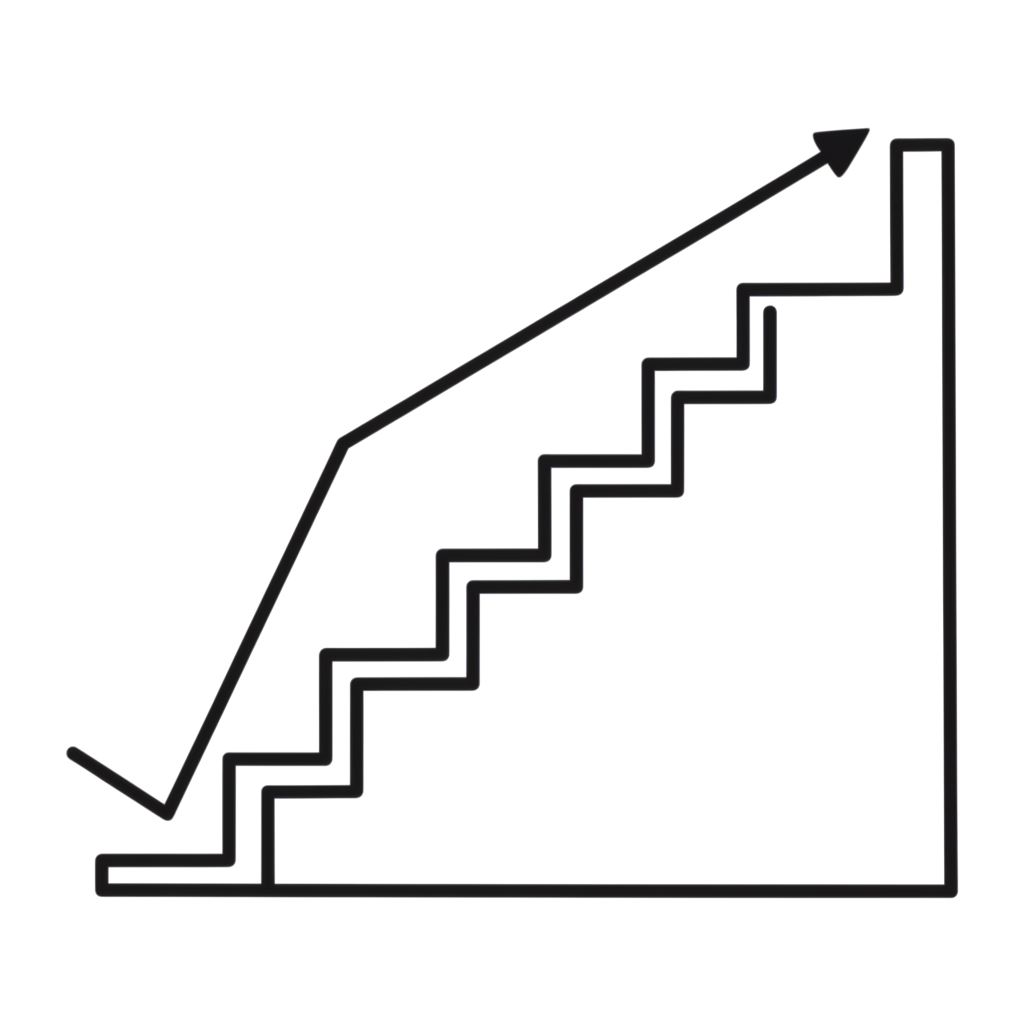
Telling the difference between a pullback, a reversal, and a correction is one of the most critical skills in technical trading. Confusing these movements can lead to poor timing, premature exits, or costly entries into failing trends. Each represents a different scale and intent in market behavior.
| Feature | Pullback | Reversal | Correction |
| Nature | Temporary dip or rally within an established trend | Complete shift in market direction | Significant market-wide decline (typically 10% or more) within a broader bull market |
| Duration | Short-term (days to weeks) | Medium to long-term (weeks to years) | Medium-term (weeks to months) |
| Magnitude | Shallow, usually 20–60% retracement of prior move | Deep, often breaks key support/resistance | Substantial, affecting multiple sectors or indices |
| Trend Status | Main trend remains intact | New trend forms in opposite direction | Bull market remains, but with a reset in valuations |
| Trading Implication | Opportunity to enter or add to trend-following positions | Signal to exit trend trades and reassess market bias | Chance to buy strong assets at reduced prices |
A pullback is like a rest stop during a long hike—it doesn’t mean the journey is over. A reversal, on the other hand, is like turning around and heading back down the trail. A correction is more like a steep downhill section that tests endurance but doesn’t necessarily end the overall climb. Historically, market corrections average about 13.3% in decline and last roughly 100 days, according to data cited by CNBC. This context helps traders assess whether a drop is part of normal market behavior or a sign of deeper trouble.
The Anatomy of a Pullback: Why They Occur
Pullbacks are not random fluctuations—they’re built into the way markets function. They arise from the interplay of psychology, supply and demand, and technical structure. Understanding the forces behind them increases the likelihood of identifying high-quality setups.
- Profit-Taking: After a strong move, early investors often lock in gains, creating temporary selling pressure. This is especially common near psychological price levels or after earnings announcements.
- Supply-Demand Imbalance: News events, economic reports, or large institutional trades can temporarily shift the balance, causing price to pause or retrace before resuming.
- Retesting Breakouts: When price breaks above resistance, it often returns to test that level—now acting as support. A successful retest confirms the breakout’s validity and strengthens the case for continuation.
- Consolidation and Momentum Building: Markets need time to absorb gains and attract new participants. Pullbacks allow weaker hands to exit and stronger buyers to accumulate, setting the stage for the next leg higher.
These dynamics make pullbacks not just normal, but healthy. They prevent trends from becoming overextended and reduce the risk of sharp, disorderly reversals. A trend that moves in steady steps—with regular pauses—is often more sustainable than one that rockets upward without interruption.
Identifying High-Probability Pullbacks: Essential Technical Analysis Tools
Spotting a genuine pullback requires more than just observing a price drop. It involves using technical tools to confirm that the counter-trend move is likely temporary and that the primary trend remains intact. The most effective approach combines multiple layers of confirmation.
Dynamic Support and Resistance: Moving Averages as Key Levels
Moving averages serve as dynamic support in uptrends and resistance in downtrends. Traders watch how price interacts with these levels during a pullback. In a healthy uptrend, price often finds support at the 20-period EMA (short-term), 50-period EMA or SMA (intermediate), or 200-period EMA/SMA (long-term). A bounce off one of these levels, especially with increasing volume, signals that institutional buyers are stepping in.
For example, a stock trending above its 50-day moving average that pulls back to touch the line and then reverses higher suggests strong underlying demand. The moving average acts as a magnet, drawing price back before the trend resumes.
Static Support and Resistance: Price Action & Trendline Confirmation
Horizontal support and resistance zones—formed by previous swing highs and lows—are powerful areas where price often reacts. When a resistance level is broken, it frequently becomes support during a pullback. This role reversal confirms the strength of the breakout. Similarly, a broken support level can turn into resistance during a bearish rally.
Trendlines also play a key role. A well-drawn trendline connecting higher lows in an uptrend can act as a guide for pullback depth. Price touching the trendline and reversing with bullish candlestick patterns increases the probability of a successful trade.
Volume Analysis: A Crucial Confirmation Filter
Volume provides insight into the strength—or weakness—behind a pullback. In a healthy uptrend, the pullback should occur on declining volume, indicating that selling is limited to short-term traders taking profits. When price begins to move higher again, volume should expand, signaling renewed institutional interest.
Conversely, if a pullback happens on heavy volume, it may suggest distribution or strong selling pressure—an early warning that the trend could be weakening. The same logic applies in downtrends: a rally on low volume is likely a bear trap, while a high-volume bounce could indicate accumulation and a potential reversal.
Candlestick Patterns and Chart Formations for Entry Signals
Once price reaches a key support or resistance level, specific candlestick patterns can signal the end of the pullback. In an uptrend, look for:
- Hammer: A single candle with a long lower wick, indicating rejection of lower prices.
- Bullish Engulfing: A large green candle that completely covers the previous red candle, showing strong buying momentum.
- Morning Star: A three-candle pattern that signals a bottoming process after a decline.
In downtrends, bearish reversal patterns like the Shooting Star, Bearish Engulfing, or Evening Star at resistance levels suggest sellers are regaining control.
Chart patterns such as flags and pennants—small consolidation zones that form during a pullback—also offer high-probability continuation signals. These patterns represent brief pauses before the next leg in the trend, often accompanied by a volume spike on the breakout.
Pullback Trading Strategies: Actionable Approaches for All Markets
With the right tools in place, traders can apply structured strategies to capture trend continuation moves. These methods work across stocks, forex, commodities, and cryptocurrencies, adapting to each market’s volatility and rhythm.
Trend Continuation Strategy: Buying the Dip in Uptrends
This strategy capitalizes on temporary weakness in a strong uptrend.
- Confirm the Uptrend: Ensure the asset is making higher highs and higher lows, with price trading above key moving averages like the 50-day and 200-day SMA.
- Wait for the Pullback: Allow price to retrace toward a support level—this could be a moving average, previous resistance, or a Fibonacci retracement zone.
- Look for Confirmation: Watch for decreasing volume during the drop and bullish candlestick patterns at support.
- Enter the Trade: Place a long order when price shows signs of reversing, ideally with rising volume.
- Set a Stop-Loss: Position it below the support level or the low of the reversal candle to limit downside risk.
- Take Profit: Target previous swing highs or use a trailing stop to ride the trend as far as possible.
Trend Continuation Strategy: Selling the Rally in Downtrends
The inverse approach applies in bear markets.
- Identify the Downtrend: Confirm lower highs and lower lows, with price below major moving averages.
- Wait for the Rally: Let price bounce toward resistance—this could be a moving average, former support, or a Fibonacci level.
- Seek Confirmation: Look for bearish candlestick patterns and weak volume on the upward move.
- Enter Short: Sell when price is rejected at resistance and begins to decline with increasing volume.
- Place Stop-Loss: Set it above the resistance level or the high of the rejection candle.
- Manage Exit: Aim for previous swing lows or use a trailing stop to capture extended downside momentum.
Fibonacci Retracement: Pinpointing Precision Entries
Fibonacci levels help quantify pullback depth and identify potential reversal zones. Draw the tool from the swing low to the swing high in an uptrend, or from swing high to swing low in a downtrend. The key retracement levels—38.2%, 50%, and 61.8%—often coincide with where price finds support or resistance.
For higher accuracy, combine Fibonacci levels with other confluences. For example, if price pulls back to the 50% retracement and also touches the 50-day EMA while forming a bullish engulfing pattern, the setup gains strength. Research published in the Journal of Finance and Investment Analysis supports this approach, showing that Fibonacci retracements, when used alongside other indicators, can produce statistically significant trend continuation signals. This study underscores the value of a multi-factor analysis.
Advanced Pullback Trading Insights: Gaining an Edge
To elevate your pullback trading, move beyond basic setups and incorporate advanced techniques that improve timing, accuracy, and confidence.
Multi-Timeframe Analysis for Enhanced Confirmation
One of the most powerful tools in a trader’s arsenal is multi-timeframe analysis. It allows you to align your trades with the dominant trend while fine-tuning entries on lower timeframes.
Start with the daily or weekly chart to establish the primary trend. If the higher timeframe shows a clear uptrend, your bias should be to buy pullbacks, not short rallies. Then, switch to the hourly or 15-minute chart to identify the exact pullback and entry trigger. This approach not only improves timing but also allows for tighter stop-losses, enhancing your risk-reward ratio.
For example, a daily chart may show a stock in a strong uptrend, while the 1-hour chart reveals a pullback to the 50-period EMA with a hammer candle forming. This confluence across timeframes increases the probability of a successful trade.
The “7% Rule” in Stock Pullbacks: A Specific Observation
While not a universal law, the “7% rule” is a practical observation used by many stock traders, especially in high-growth or momentum stocks. It suggests that a pullback of around 7% from a recent peak often represents a healthy consolidation—deep enough to shake out weak holders but not so deep as to signal a trend change.
Traders use this as a filtering mechanism:
- Less than 7%: May be too shallow, indicating strong demand and little profit-taking.
- Around 7%: Often ideal for re-entry, offering a balance between risk and reward.
- More than 7%: Warrants caution; could indicate distribution or the start of a deeper correction.
However, this rule should never stand alone. Always confirm with technical structure, volume, and price action. A 7% drop on high volume with bearish candlesticks is far more concerning than the same drop on low volume with bullish reversal signals.
Psychological Discipline: Overcoming Trading Biases in Pullbacks
One of the biggest challenges in pullback trading isn’t analysis—it’s psychology. The emotional difficulty of buying when others are selling, or selling when prices are rising, can derail even the best strategy.
Common mental traps include:
- FOMO (Fear of Missing Out): Jumping into a trend too late, then getting shaken out by the first pullback.
- Confirmation Bias: Ignoring warning signs because you’re emotionally committed to a trade.
- Counter-Intuitive Entries: Buying during a dip feels risky, even when the trend is strong. Discipline and a clear plan are essential to overcome this.
Successful pullback traders cultivate patience. They wait for the right setup, follow their rules, and avoid emotional decision-making. Keeping a trading journal, reviewing past trades, and sticking to a predefined strategy help build the mental resilience needed for long-term success.
Comprehensive Risk Management for Pullback Traders
No trading strategy can survive without proper risk management. Pullbacks, by their nature, involve buying weakness or selling strength—moves that carry inherent risk if the trend fails.
Strategic Stop-Loss Placement: Protecting Your Capital
A well-placed stop-loss is not optional—it’s a necessity. For long entries in an uptrend, place the stop below the key support level, such as the low of the reversal candle, the previous swing low, or beneath a moving average. For short entries, place it above the resistance level or the high of the bearish rejection.
Stops should be based on market structure, not arbitrary dollar amounts or percentages. A stop placed too tight may get hit by normal volatility; one too wide exposes too much capital. The goal is to give the trade room to breathe while protecting against a true trend reversal.
Position Sizing and Capital Allocation: Managing Overall Exposure
Even with a good entry and stop-loss, poor position sizing can wipe out an account. The key is to limit risk per trade to a small percentage of your total capital—typically 1% to 2%.
To calculate position size:
Position Size = (Account Capital × Risk %) / (Entry Price – Stop-Loss Price) (for long trades)Position Size = (Account Capital × Risk %) / (Stop-Loss Price – Entry Price) (for short trades)
For example, with a $10,000 account and a 1% risk limit ($100), and a $0.50 stop distance, you can buy 200 shares. This disciplined approach, emphasized by top trading educators, ensures longevity and consistency in trading performance.
Conclusion: Mastering Pullbacks for Consistent Trading Success
Pullback trading is a proven method for aligning with market trends while minimizing risk. By waiting for temporary weakness in an uptrend or strength in a downtrend, traders position themselves for high-probability entries with favorable risk-reward profiles. Success in this strategy depends on a blend of technical analysis, pattern recognition, volume confirmation, and disciplined execution.
Mastering pullbacks requires distinguishing them from reversals and corrections, using tools like moving averages, Fibonacci levels, and candlestick patterns, and applying multi-timeframe analysis for precision. Observations like the “7% rule” can offer guidance, but must be validated with broader technical context. Above all, long-term profitability hinges on rigorous risk management—through proper stop-loss placement and position sizing—and the psychological strength to stick to the plan.
Consistent results don’t come from luck or chasing every move. They come from patience, preparation, and a systematic approach. With practice and discipline, pullback trading can become a cornerstone of a sustainable and profitable trading career.
1. What is a pullback in trading, and how does it differ from a trend reversal?
A pullback is a temporary counter-trend movement within an established primary trend, offering an opportunity to join the trend at a better price. A trend reversal, on the other hand, signifies a complete change in the prevailing trend, where the market’s direction shifts entirely from bullish to bearish or vice versa. The key difference lies in duration and magnitude: pullbacks are short and shallow, while reversals are significant and long-lasting.
2. What technical indicators are most effective for identifying a strong pullback?
Effective technical indicators for identifying strong pullbacks include:
- **Moving Averages:** Such as the 20-period, 50-period, or 200-period EMA/SMA, which act as dynamic support/resistance.
- **Static Support and Resistance Levels:** Previous highs/lows or breakout points that price retests.
- **Trendlines:** Price often bounces off established trendlines during a pullback.
- **Volume Analysis:** Healthy pullbacks typically occur on declining volume, confirming temporary profit-taking rather than strong selling pressure.
- **Fibonacci Retracement Levels:** Often used to pinpoint potential reversal zones (e.g., 38.2%, 50%, 61.8%).
3. Can pullback trading be applied to all financial markets, including cryptocurrency?
Yes, pullback trading is a versatile strategy applicable across various financial markets, including stocks, forex, commodities, and cryptocurrencies. The underlying principles of trend continuation, support/resistance, and market psychology are universal, though the specific volatility and typical pullback depths may vary between asset classes.
4. How long should a trader expect a pullback to last before the trend resumes?
The duration of a typical pullback can vary significantly, ranging from a few hours (on lower timeframes) to several days or even weeks (on higher timeframes). There’s no fixed rule, but pullbacks are generally short-lived compared to the overall trend. Traders look for confirmation signals like candlestick reversal patterns and increasing volume in the direction of the main trend to indicate the end of the pullback.
5. What are the common entry and exit points for a pullback trading strategy?
Common entry points include:
- When price bounces off a key moving average or static support/resistance.
- Upon the formation of a bullish/bearish reversal candlestick pattern at a support/resistance level.
- At a specific Fibonacci retracement level.
Exit points typically involve:
- Placing a strategic stop-loss order below/above the key support/resistance level.
- Taking profit at previous swing highs/lows or significant resistance/support zones.
- Using a trailing stop to lock in profits as the trend continues.
6. How does risk management, such as stop-loss placement, apply specifically to pullback trades?
For pullback trades, stop-loss orders are placed strategically based on market structure. In an uptrend, the stop-loss goes logically below the support level where the price is expected to hold (e.g., below a moving average, previous swing low, or the low of the reversal candle). In a downtrend, it’s placed above the resistance level where the price is expected to be rejected. This ensures that if the pullback turns into a reversal, your risk is predefined and limited.
7. What is the “7% rule” in stock trading, and how does it relate to pullbacks?
The “7% rule” is an observational heuristic, particularly noted in growth stock trading, suggesting that a pullback of approximately 7% from a recent high can be considered a healthy consolidation within a strong uptrend. It’s used as a filtering mechanism: shallower pullbacks might be too insignificant, while much deeper ones could signal a weakening trend. It should be combined with other technical analysis tools for confirmation, rather than used in isolation.
8. Are there specific chart patterns that reliably signal the end of a pullback?
Yes, several candlestick patterns can signal the end of a pullback and the resumption of the main trend:
- **Bullish (for uptrend pullbacks):** Hammer, Bullish Engulfing, Piercing Pattern, Morning Star.
- **Bearish (for downtrend pullbacks):** Shooting Star, Bearish Engulfing, Dark Cloud Cover, Evening Star.
Additionally, smaller consolidation patterns like bullish flags or pennants can form during a pullback, indicating a continuation of the primary trend.
9. What psychological factors are important to manage when executing pullback trades?
Key psychological factors include:
- **Patience:** Waiting for the ideal setup rather than chasing trades.
- **Overcoming FOMO (Fear of Missing Out):** Resisting the urge to enter before a pullback completes.
- **Emotional Detachment:** Buying into weakness or selling into strength can be counter-intuitive; trust your analysis over emotion.
- **Discipline:** Sticking to your trading plan and risk management rules, even after losses.
10. What is the opposite of a pullback in trading terminology?
While there isn’t a single direct antonym that is universally used, the closest concept to the “opposite” of a pullback would be a breakout or continuation of the trend. A pullback is a temporary move against the trend, whereas a breakout is a strong move in the direction of a new trend or the continuation of an existing one after consolidation. If considering the context of a trend, a pullback is a dip, while the opposite would be the strong move pushing the price higher or lower in the direction of the main trend.